Retirement - Why "Doing Nothing" Doesn't Work
Categories: retirement
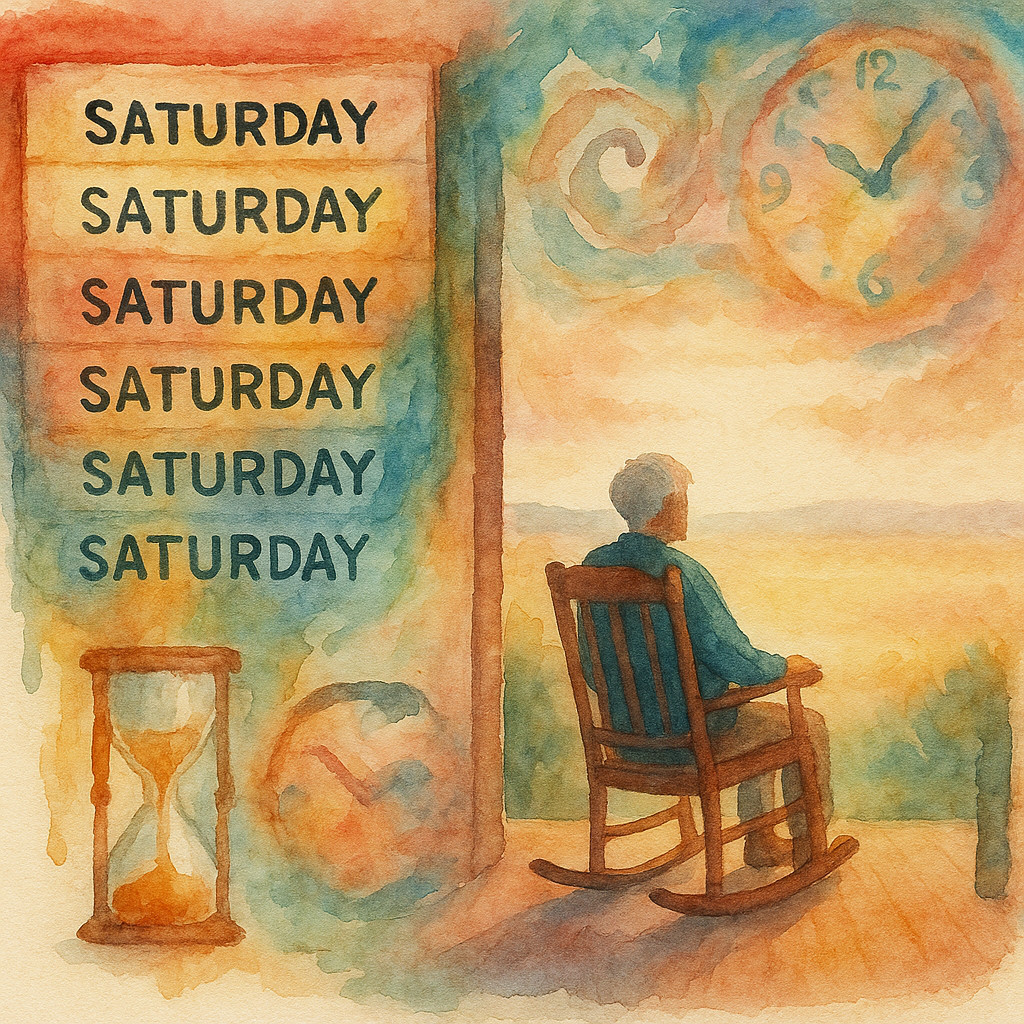
When you ask someone who is about to retire what they’re most excited about, they often respond with something like, "I can finally do what I want." There’s a certain relief in that statement, shaped by years of waking up to an alarm and coming home tired after a long day at work. The idea is simple: if you take away all the responsibilities and obligations, the free time you gain will naturally be filled with enjoyable activities.
Many people think that when they have unstructured time, they can easily fill it with whatever they want to do. However, this idea is often misleading. The issue isn’t about the person, but rather how time behaves when it isn’t organized in any particular way.
Unstructured time isn’t just an empty space waiting to be filled. It’s more like water that’s been poured out without a container. Instead of staying in one place, it spreads out and eventually settles into whatever requires the least effort. This usually means getting lost in watching TV, scrolling through social media, doing small chores that take longer than they should, or taking naps that happen more by chance than by choice. This isn't a sign of weak willpower; it’s simply what happens when there’s nothing to guide how we use our time.
The Gap Between Imagined Time and Lived Time
Psychologists who explore how people imagine their future selves have found a common pattern: there's often a disconnect between what people think they'll feel during long periods of free time and what they actually experience when they live through it. For instance, many can easily picture the joy of a pleasant afternoon—like reading a book on the patio or savoring a leisurely cup of coffee. However, when it comes to imagining what it feels like to have many days in a row without any obligations, that's a lot tougher. The mind struggles to create a clear picture of the dull routine that can come with long stretches of free time, unlike those vibrant single moments. People prepare for the relaxing moments but often overlook the challenges of many repetitive days.
This disconnect becomes even clearer when researchers look at how satisfied people are after they retire. Many find that life satisfaction usually jumps right after they leave their jobs, which makes sense since escaping a stressful job can bring significant relief. However, this initial happiness often fades within the first year. Eventually, those who manage to find new activities or routines tend to get back on track. A well-known research project called the Health and Retirement Study tracks this trend (you can find more information at https://hrs.isr.umich.edu/). Not everyone experiences this dip in satisfaction, and some people skip it altogether. Still, it happens often enough that researchers see it as a normal phase of retirement rather than a personal flaw.
What the Job Was Actually Doing
What causes people to feel down after leaving a job is usually not the work itself. In fact, most people don’t miss the actual tasks of their old job as much as they thought they would. What they really miss is the structure that the job provided, which often goes unnoticed.
A job sets a routine. It makes you wake up at a certain time, whether you feel like it or not. It requires you to eat meals during specified times, like lunch breaks and dinner after work. It even encourages you to get some exercise, fitting it into whatever time remains in your busy day. Plus, it brings social interaction simply by putting you in the same place with coworkers for hours. Although this structure wasn’t created for your well-being, it ended up helping you in many ways without you realizing it.
When you retire from your job, that structure goes away all at once. You may find that there’s no reason to wake up at a certain time anymore, so you start sleeping in a little longer each week until you no longer have a wake up time at all. Meal times become irregular, occurring whenever you feel hungry. Exercise, which used to fit into your lunch break, gets pushed to the bottom of your list, often never actually happening. These changes don’t hit you all at once. They sneak in slowly, so you can go for months without noticing how your daily routine has quietly fallen apart.
The One Long Saturday Problem
There's a popular saying about retirement, often linked to career coach Ernie Zelinski, that describes retirement without a plan as just one long Saturday. This image is helpful because it highlights an important truth about what it feels like when you suddenly have a lot of free time, and it also explains why that feeling might not last. A Saturday is enjoyable because it stands out from the regular work days (Monday to Friday for many of us). It’s a planned break from the daily routine, which makes it refreshing. However, if there are no work days to take a break from, Saturday starts to lose its charm. It can feel like just another day, much like Tuesday but with lower expectations. Eventually, it doesn't feel like a break at all since there's nothing to take a break from anymore.
Many people who haven't experienced retirement yet think that having all this free time will feel like a long holiday. But vacations work differently than we might realize. They're temporary and often take place in new places, which forces us to change our usual habits because the old ones don’t fit in the new environment. Retirement, on the other hand, is not temporary, and for most people, it happens in the same homes and neighborhoods where they’ve lived for years. Without the fresh change a vacation brings, there’s nothing to encourage new routines. So, people often fall back on what feels easiest, and that’s usually not the exciting version of retirement they imagined while they were still working.
Why More Freedom Doesn't Mean More Action
Motivation research helps explain why many retirees struggle to stay active and engaged after leaving the workforce. In regular jobs, people have clear deadlines and responsibilities set by others – meetings are scheduled, tasks are assigned, and there's a natural flow of activities to follow. This structure helps people stay organized without much effort on their part. However, once people retire, that framework disappears. Creating a new daily routine becomes a challenge, and many retirees find themselves unsure of where to start because they’ve never had to build this structure themselves.
Additionally, another issue arises when retirees have too many choices about how to spend their time. With endless options available, it can become overwhelming. Instead of feeling excited about all the possibilities, many retirees end up not doing much at all. This is similar to something called the "paradox of choice," where having too many options can actually lead to less action (https://en.wikipedia.org/wiki/The_Paradox_of_Choice). For instance, if someone has a whole afternoon free with numerous activities to choose from, they might end up doing very little, simply because it’s hard to decide. In contrast, if they have a single plan in place, it takes away the decision-making stress, allowing them to enjoy their time more fully.
What This Means Going Forward
Retirement doesn’t have to mean that life takes a nosedive or that retired people struggle more than others. But the common idea of retirement as a never-ending break filled with relaxation misinterprets how leisure really works. Enjoying free time often feels great when it's balanced with responsibilities. However, when all responsibilities are gone, and leisure becomes the only focus, it can lose its charm.
Research shows that the people who adapt best to retirement are not those who simply avoid structure. Instead, they are the ones who intentionally create a new routine for themselves. This can happen through careful planning or by learning from their experiences along the way. The focus of this discussion is about how to build a new kind of structure for a life that's no longer centered around work. The goal isn’t to recreate an old schedule; it's to create a new one where weekends still feel special, and other days feel unique in their own way.