Downsizing, decluttering, or staying put? Housing choices later in life - conclusion
Categories: retirement
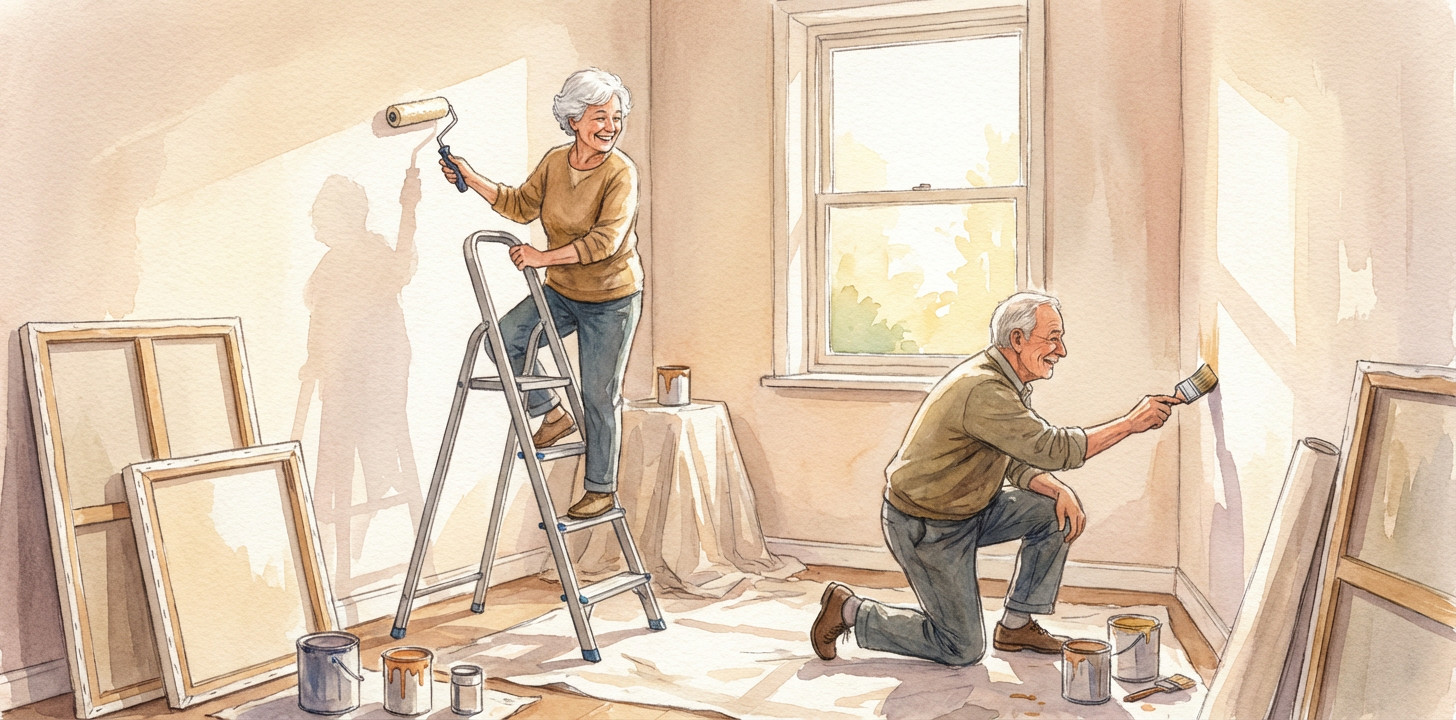
This series examines how our housing needs change as we get older and offers common strategies for addressing those changes. In the previous articles in this series, we looked at downsizing, decluttering and staying put. In this final article, we will give a summary and a conclusion.
This article is intended for informational purposes and does not constitute financial, legal, or medical advice. Readers are encouraged to consult qualified professionals when making housing, financial, and healthcare decisions.
The Decision-Making Framework
With three potential paths available, how do you decide? The following table shows how each of the three options affects each issue. Usually, the decision will be based on a trade-off between different factors, rather than any single issue.
| Factor | Downsizing | Decluttering & Modifying | Staying Put (As-Is) |
|---|---|---|---|
| Upfront Cost | High (moving, buying/renting) | Moderate (organizer, modifications) | Low |
| Ongoing Cost | Usually lower | Moderate (maintenance + services) | Variable; can spike |
| Emotional Difficulty | High | Moderate | Low initially; may rise |
| Safety Improvement | High (if new home is age-friendly) | High (if modifications are made) | Low to none |
| Social Impact | Disruptive, then potentially positive | Neutral to positive | Positive short-term; risk of isolation long-term |
| Flexibility | High (fresh start) | Moderate | Low (locked into existing structure) |
Besides the table, here are five important areas to consider.
Health: Can you move around your home safely? Think not only about today, but also about what life might look like in five, ten, or fifteen years. Could your house be changed to fit a walker, wheelchair, or regular medical care? If your home has more than one floor, would it be hard to get around if stairs became a problem?
Finances: Can you afford to keep this home with your expected income over the next twenty years? Think about your usual monthly expenses and how they might change as you get older. Also, do you have extra savings for big repairs if they come up?
Social connection: You may have a strong social network where you live now, but how could that change in the future? If your neighbours are close to your age, remember they might move away or be replaced by younger families. If you need a car for your social life, what would happen if you could no longer drive?
Family: Should your children or other family members be involved in this decision? Have you talked openly about your wishes, concerns, and finances? What do they think?
Timeline: Are you making this decision ahead of time, while you have options, or are you reacting to a crisis? It's best to plan before you have to, but sometimes life brings surprises, and you have to respond.
The Emotional and Psychological Dimension
Like any big life decision, choosing where to live later in life is both emotional and practical. A home is much more than just a building. For many retirees, especially after leaving work or raising children, home becomes a big part of who they are. "I am the person who lives in this house, in this neighbourhood, with these things around me." Changing that can cause a real sense of loss. Whether you move, declutter, or just see your neighbourhood change, the feelings can be much the same.
Environmental psychologists call the deep bond people form with meaningful places \'place attachment.\' Studies show this bond grows stronger the longer you live somewhere, and it is especially strong for older adults. Leaving a long-term home can cause grief much like losing a loved one, and that feeling should be recognised, not ignored.
Sorting through your things, whether you are moving or just decluttering, can be emotional. As you go through cupboards and old boxes, you may find items that bring back memories---like your children's school artwork or souvenirs from past holidays. If you have lost a spouse, you will find many reminders. This process can be bittersweet, and even happy memories can remind you of how much time has passed. For some, this is healing; for others, it can be hard. If you are finding it very difficult, there are therapists who focus on life changes and can help. Asking for support shows strength.
One helpful way to cope is to change how you think about the situation. For example, instead of saying "I am losing my home," try thinking "I am choosing my next chapter." Instead of "I can't manage any more," try "I am building a life that fits who I am now." The words you use shape your thoughts, and the story you tell yourself about this change is important.
Remember, you do not have to do this alone. Ask your grandchildren to help you look through old photos and keepsakes. They will ask questions, and you may end up sharing stories you have not told in years. Invite a friend to be with you while you sort through a tough closet. This transition can be emotional, but it does not have to be lonely.
Legal, Financial, and Tax Considerations
The housing choices we have talked about come with important legal and financial issues. It is wise to think them through carefully and, sometimes, get professional advice.
If you have decided to sell your existing house, perhaps to buy a smaller house or move in with relatives, then you might be left with quite a sizeable sum of money, perhaps six figures. In the UK, you do not normally pay taxes on any profit from selling your main residence. There are a few exceptions, where you might be liable for Capital Gains Tax on some or all of the profit. These include:
-
If you have ever rented out all or part of the house, at any time now or in the past.
-
If you have ever used part of the house for business, at any time now or in the past. Typically, this applies if you have claimed any business tax relief.
-
If you have a very large house with a lot of associated land.
If any of these situations apply to you, it is best to get professional tax advice. Otherwise, you probably will not owe any taxes.
If you plan to leave a large amount of money to your heirs, it is a good idea to get estate planning advice.
It is also important to check how your move will affect your Council Tax. Usually, if you move to a smaller home in the same Local Authority area, your Council Tax will go down or stay the same, depending on the band. If you move to a different area, check what the new tax will be. Different areas can have very different charges, and sometimes the results are surprising. For example, some wealthy parts of London have low taxes because there are fewer people needing council services.
Equity release can be helpful, but it is important to fully understand the terms and conditions. You must keep living in your home, take care of it, and stay up to date with council tax and insurance. Interest in the loan is usually added to the loan value, to be paid after you die, which means your heirs will get less than the remaining value of the home, and potentially, they might get nothing at all. Details are important and should be checked with an independent financial advisor.
Trends and Innovations Shaping the Future
The world of later-life housing is changing quickly, and several trends are already starting to reshape it. By the end of this decade, things may look very different.
Smart home technology and artificial intelligence are leading the way. Beyond today's voice assistants and fall detectors, new systems are being developed that can track health signs, sleep, walking, and medication in real time, sending alerts to caregivers or doctors if something changes. Robotic companions, already used in Japan, are being designed to offer social interaction, help with daily tasks, and mental stimulation. These tools will not replace human caregivers, but they can help people live safely at home for longer.
Multigenerational housing is becoming popular again. Homebuilders are seeing more demand for homes with separate suites, two main bedrooms, or attached apartments for ageing parents or adult children. This trend comes from both cultural traditions in some communities and economic reasons that make sharing a home practical.
On the policy side, the age-friendly community movement is growing. The World Health Organisation's Global Network for Age-Friendly Cities and Communities, is shaping city planning, transportation, public spaces, and housing policies around the world. The aim is to help older adults live safely, stay active, and keep their independence, no matter where they live.
Conclusion
There is no single right answer to what you should do with your home later in life. The best answer is the one that fits your health, finances, relationships, values, and future plans. What matters most is not which option you pick, but that you choose thoughtfully, honestly, and are open to changing your mind as life changes.
Remember, downsizing, decluttering, and staying in your home are not either-or choices. Many people move through these options over time. You might start by decluttering and making your home safer for the next decade, then, when it feels right, move to a community with more support and social opportunities. The important thing is to plan ahead, not just react to changes as they happen.
If you remember one thing from this article, let it be this: start the conversation now. Talk with your partner, your children, and your financial advisor, and be honest with yourself about your needs and worries. These talks might feel uncomfortable and bring up hard topics, but it is much better to have them at home, on your own terms, than during a crisis in a hospital.
No matter which path you choose, the goal is the same: safety, dignity, connection, and a home, wherever it is, that fits your life today.